
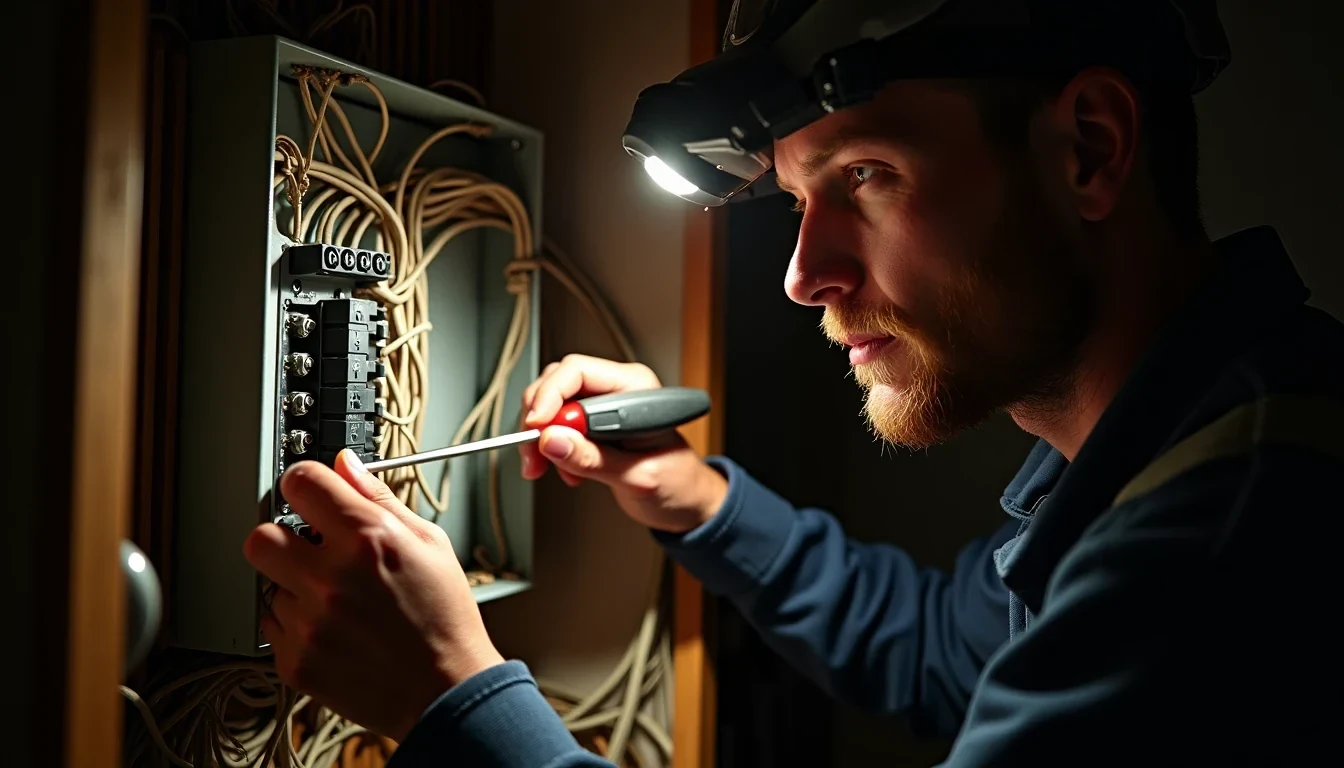
You buy a house in Pinelands, pay the bond, the rates, the insurance, and tell yourself the big costs are covered. Then the distribution board starts humming on a Sunday evening, or the earth leakage trips every time the geyser kicks in, and you discover what property ownership actually costs. Electrical maintenance sits in that blind spot where homeowners hope for the best until the worst arrives with a quote attached.
When small faults become expensive failures
Electrical systems do not age gracefully. Wiring insulation cracks, connection points loosen, circuit breakers lose their calibration, and geyser elements accumulate scale while drawing more power to do the same job. In older Pinelands homes, decades of renovations, extensions, and DIY alterations layer complication onto original installations. A relocated plug point here, an added circuit there, and suddenly fault-finding requires tracing a maze no current electrician fully mapped.
The difference between electrical upkeep and cosmetic repairs is that postponement carries consequences beyond appearance. An overheating distribution board can destroy itself and everything downstream. A defective earth leakage unit can leave occupants exposed to lethal fault currents. These are not hypothetical risks; they translate directly into emergency callout fees after hours, replacement of multiple damaged components, and potential injury liability.
Reactive maintenance, the habit of calling for help only after breakdown, almost always costs more. A minor wiring anomaly caught early might need two hours and a handful of materials. Left until it shorts, the same location could require extensive tracing, replacement of cable runs, and repair of secondary damage. For commercial properties, the arithmetic worsens: lost trading hours, spoiled stock, damaged equipment, and staff standing idle.
The compliance trap in property transactions
Property sales expose neglected electrical work with merciless efficiency. South African law mandates a valid Electrical Certificate of Compliance for every transfer. The inspection that produces it examines what owners rarely see: earthing integrity, protection device function, wiring condition, and whether alterations were performed by qualified hands and properly documented.
Sellers who wait for the buyer’s inspection to discover problems face a compressed timeline and limited negotiating position. Remedial work must happen before transfer, often at premium rates. Buyers can use non-compliance to renegotiate price or walk away entirely. Proactive sellers who commission inspections before listing gain time to obtain competitive quotes and complete work without transaction pressure.
Understanding compliance requirements before entering the market separates prepared owners from those caught funding emergency repairs while simultaneously paying occupational rent or bridging finance. Some contractors coordinate multiple compliance inspections, streamlining the administrative burden for sellers managing several certificate types.
What preventative maintenance actually involves
Preventative electrical maintenance means identifying deterioration before it causes failure. It means making informed decisions about intervention timing based on equipment condition, failure consequences, and available budget.
Homeowners can perform basic monitoring without specialist tools. Monthly testing of the earth leakage unit using its test button confirms protection function. Visual inspection of visible wiring, plug points, and switches for discolouration, scorching, or physical damage catches developing problems. Distribution boards should run cool and quiet; warmth, buzzing, or crackling indicate loose connections or overloading that demand professional attention.
Beyond these checks, periodic professional assessment makes sense for older properties or those with complex alteration histories. Qualified electricians can identify issues invisible to occupants: degraded insulation, inadequate earthing, overloaded circuits operating within apparent normal limits but stressed beyond safe margins. The cost of such assessment is modest against the expense of fault-finding under emergency conditions.
Choosing who does the work
Not all electrical contractors operate to the same standard. Substandard work creates costs that surface later, often dangerously. Registration with the Electrical Contracting Board of South Africa and possession of a valid Wireman’s License are minimum qualifications. Experience with the specific property type matters: domestic fault-finding in renovated Pinelands homes requires different skills from commercial installation or new construction.
Reputable contractors provide detailed written quotations itemising labour, materials, call-out fees, and scope boundaries. They carry public liability insurance and communicate clearly about scheduling, arriving when promised. For property owners, the Electrician in Pinelands who builds repeat relationships through transparent practice delivers more reliable value than the lowest initial quote from an unknown operator.
Contractors serving defined local areas gain operational advantages that can benefit customers. Reduced travel time improves scheduling flexibility and emergency response capability. Familiarity with local property stock, common installation practices, and typical fault patterns speeds diagnosis. In labour-intensive trades, these efficiencies affect both cost and service quality.
Where energy efficiency upgrades actually pay
Electricity costs remain a major household operating expense, creating appetite for upgrades that reduce consumption. The return on such investments varies enormously based on usage patterns and installation specifics. Replacing frequently used incandescent or halogen lighting with efficient alternatives yields measurable, ongoing savings. Expensive equipment installed in rarely occupied spaces may never recover its capital cost.
Geyser timers represent a targeted intervention with potentially strong returns, given that water heating typically dominates residential consumption. The savings depend on household hot water patterns, geyser insulation condition, and thermostat setting. Well-designed installation matters: a timer poorly specified or incorrectly set saves nothing while adding failure points.
Contractors who understand both installation requirements and operating economics can guide clients toward interventions with genuine payback rather than selling equipment on vague promises. The key electrical services worth purchasing are those matched to actual consumption patterns and property conditions, not generic packages applied indiscriminately.
The real cost of ownership
Property ownership in established Cape Town suburbs carries electrical maintenance as a non-negotiable component of total cost. It is not an optional extra to defer indefinitely. The trade-off is not between spending and saving, but between planned expenditure with controlled timing and emergency outlay under duress. Distribution boards, wiring, protection equipment, and connections all require attention as they age. Understanding this, budgeting for it, and selecting qualified local contractors to perform assessment and remediation protects both safety and financial position. For Pinelands homeowners, the practical discipline is straightforward: inspect before listing, maintain before breakdown, and choose competence over the lowest quoted price.