
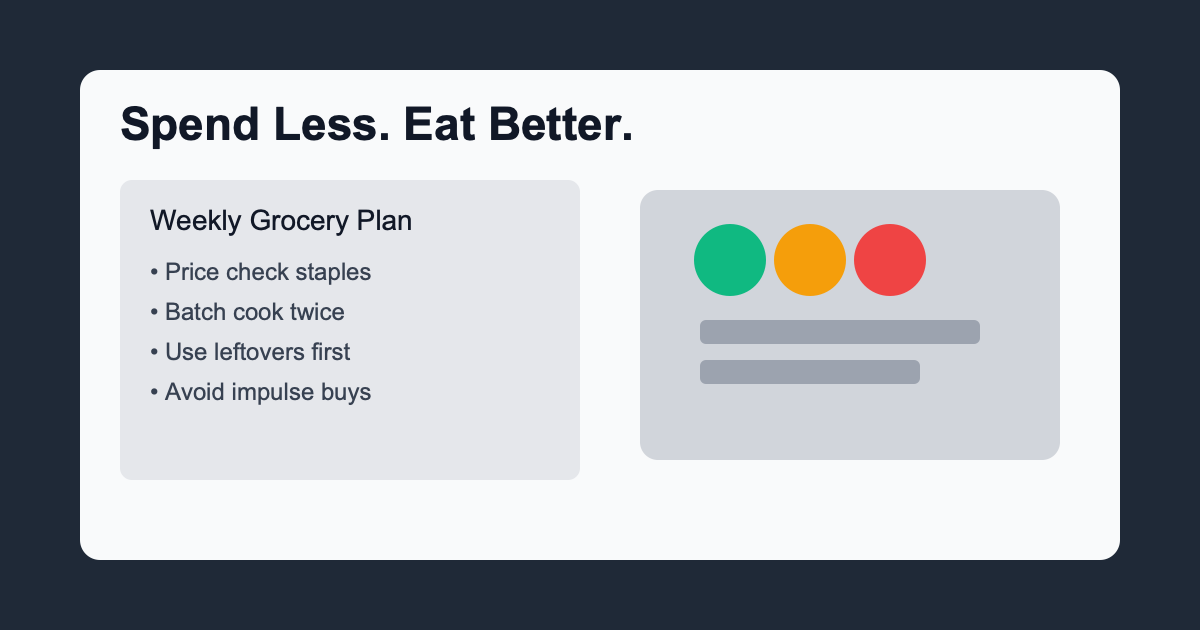
How to Cut Your Grocery Bill Without Eating Worse
When money is tight, groceries are usually where the pressure shows first. You open the fridge, look at your banking app, and realize the old way of shopping is not sustainable anymore.
The answer is not starving yourself or living on instant noodles. The answer is using a tighter system: plan fewer meals better, buy with intent, and stop silent leaks that drain money every week.
Why grocery budgets collapse
Most people do not overspend because they are reckless. They overspend because the process is loose: shopping without a plan, buying specials you did not need, paying convenience tax for last-minute items, and throwing out food at week-end.
Start with a 7-day meal framework
Use a repeatable week: 2 low-cost protein dinners, 2 bulk-cook dinners, 2 leftovers nights, and 1 flexible night.
Build a mini price book
Track baseline prices for around 20 staples across 2 or 3 stores. A deal is only a deal if it beats your known normal price.
Stop the three expensive habits
- Daily top-up shopping
- Bulk buying without usage plan
- Shopping hungry or rushed
Cheap protein strategy that still works
Rotate eggs, beans/lentils, chicken portions, and tinned fish based on real weekly pricing.
Use base meals, then vary flavour
Keep a few base meals and change spice profile to reduce waste and decision fatigue.
Waste is a hidden grocery tax
Use oldest-first, assign leftovers immediately, and keep an “eat first now” fridge shelf.
The 48-hour no-spend buffer
Before unplanned grocery trips, wait 48 hours unless it is a true essential.
Keep a realistic emergency pantry
Maintain practical staples and long-life proteins to absorb mid-month cashflow dips.
Weekly 15-minute review
Check unused purchases, price jumps, and swaps for next week. Small corrections compound.
Final take
Cutting your grocery bill is about control, not punishment. Keep the system simple and consistent.